Tuesday, December 11, 2018

The Equality State finds a better way

In a bold and courageous move, the Management Council of Wyoming’s legislature has updated its policy covering Anti-Discrimination and Sexual Harassment (Policy 02-02). On Wednesday, December 5, 2018 it opted to make two changes to the policy.

First, it made clear that elected representatives and senators are answerable to the people who elected them, and not to the state as employees. Second, it replaced a long list of protected categories with the simple and clear language of state and federal law.
Cathy Connolly, D-Laramie

It was this second change that ignited the discussion. Even though many nationalities, races and colors were represented, none batted an eye at deleting “race, color and national origin” from the policy. None of the religious people present cared about keeping “religion” as a protected class. Not a single woman argued that removing “sex” from the discrimination policy put her in jeopardy. The only category that people came to talk about was “sexual orientation and gender identity” (SOGI). That’s a fact worth pondering.

Representative Cathy Connolly (D-Laramie) articulated the significance of this change as well as anybody. Talking about the SOGI language she said, “Organizations, businesses are adding that language. No one is taking it out. No one is taking out protected classes.” She is almost right.

Over the past decade corporate offices, executive agencies, cities and states all over America have been jumping on the SOGI train. Here in Wyoming, Laramie, Jackson and Casper have added some version of this language to city code. But not everyone wants to ride this train.

The U.S. legislative branch has declined to put this language into federal law. State lawmakers have rejected at least six different proposals since 2009 that would have inserted SOGI language into Wyoming statute. In November of 2017 the city of Sheridan adopted a discrimination policy designed to protect all citizens without using the highly controversial language. Most other Wyoming cities have quietly opted not to take up the matter at all.

Cheyenne City Council SOGI hearing

Still, it is rare indeed for a jurisdiction to repeal such language once it has been inserted. Only two cities, to my knowledge, have done so. Houston, Texas and Springfield, Missouri both inserted SOGI language through their respective city councils. But in both places, citizens petitioned to make the issue a ballot referendum. In both places, the citizens repealed the language by majority vote.

Now the Management Council for Wyoming’s legislature has joined the vanguard of jurisdictions that are reconsidering the prudence of adopting this language. By a narrow vote (7-6) it decided to protect the employees of the Legislative Services Office and the citizens who work with the legislature by a policy that is explicitly tied to existing state and federal laws without creating a new protected class.
Standing in support of change to Policy 02-02

Three people from Evanston, myself included, traveled to Cheyenne to observe and participate in the hearing (22:17). Every seat was filled, while many people stood along the walls and spilled into the hallway. Others watched a video link in a room across the way. Clearly the issue was important to Wyomingites. I met people from Gillette, Sheridan, Torrington, Laramie, Casper, Douglas and Thermopolis. One even travelled from Meeteetse.

Senate President, and Chairman of the Management Council, Eli Bebout (R-Riverton) ran a professional and fair meeting. He invited each side of the issue to testify for 30 minutes limiting each individual speaker to three minutes. Those favoring repeal of the SOGI language were invited to speak first.

Representative Cheri Steinmetz (R-Lingle) presented the legal and constitutional case for removing the language. She emphasized how the Wyoming Constitution is worded to protect the equality of all her citizens in the broadest terms. The singling-out of one group of citizens as a protected class weakens those broad protections.

Cheri Steinmetz, R-Lingle

Representative Nathan Winters (R-Thermopolis) next testified that that “language like this, rather than protecting freedom has been used consistently across the country to limit it. It has not been used to enhance rights, but rather to weaponize the law regarding free conscience especially toward people of faith.”

Winters expressed his belief that SOGI language inserted into this policy could diminish the free debate of ideas in the legislature—the precise place where such debates ought to be held. For this reason, he and numerous other legislators were unable to sign the policy that included SOGI language.
Unitarian Universalist clergy

The claim that SOGI language suppresses free speech and the free exercise of one’s conscience was in the heart of every speaker who urged the Council to remove the language. One would expect that their opposition would seek to refute that claim. Curiously, no one did. Rather, when Chairman Bebout turned the microphone over to those lobbying to retain SOGI language in the policy, speaker after speaker asserted that there ought to be laws against saying certain things.
Dan Zwonitzer, R-Cheyenne

Representative Dan Zwonitzer (R-Cheyenne) referred to a speech made on the floor of the House of Representatives in 2013 (2:15:55). When one of his colleagues cited health statistics from a peer-reviewed journal Zwonitzer threatened him with physical violence “if he ever said that again within five feet of me" (35:35). He admitted that he was wrong to threaten a colleague but argued that SOGI language is intended to give him the right to charge a colleague with discrimination for saying such things.

Over the past ten years we have come to learn that this is the sticking point of SOGI language. It makes everyone feel good to say that we don’t discriminate against anybody. But without a clear definition of discrimination, we wind up talking past one another.

Most people think that discrimination means subjecting people to unfair rules and standards based on irrelevant factors. Nobody wants that. But when people are charged with discrimination merely for speaking the truth as they understand it, unfair rules and standards are a result of the very laws that were supposed to prevent them.

That’s why Wyoming is a leader in finding a better way to protect everyone. Our founding documents generally refrain from singling out any persons or groups when listing the freedoms of Wyomingites. They did not do this in order to exclude anybody, but precisely to include everybody.

Senator Drew Perkins made this point brilliantly when he was explaining his vote to improve the policy. He read aloud from the Wyoming Constitution’s Declaration of Rights. Article 1, Section 2: Equality for all, "In their inherent right to life, liberty and the pursuit of happiness, all members of the human race are equal."
Drew Perkins, R-Casper

Next Perkins read Section 3: Equal political rights, "Since equality in the enjoyment of natural and civil rights is only made sure through political equality, the laws of this state affecting the political rights and privileges of its citizens shall be without distinction of race, color, sex, or any circumstance or condition whatsoever…”

According to the Constitution of the State of Wyoming, he went on to say (1:31:34), “Everybody gets treated equally. Everybody gets treated with respect. Everybody has got their rights and we can’t distinguish or discriminate based on any characteristic—whether it’s protected under federal law, whether it’s not protected under federal law. Our constitution is broader than that.”
Management Council

After that speech Management Council members Eli Bebout (R-Riverton), Steve Harshman (R-Casper), Donald Burkhart, Jr. (R-Rawlins), Mike Greear (R-Worland), David Miller (R-Worland), Drew Perkins (R-Casper) and Ray Peterson (R-Lovell) voted to update the policy.

Voting to retain the SOGI language were John Hastert (D-Green River), Chris Rothfuss (D-Laramie), Michael Von Flatern (R-Gillette), James Byrd (D-Cheyenne), Cathy Connolly (D-Laramie) and John Freeman (D-Green River).

The Management Council should be commended. By its work, the Equality State remained true to her name.

Friday, December 7, 2018

WTE: Corporal DeMaret Kirtley, one of the “Chosin Few”

The battle of Chosin Reservoir was one of the most brutal battles ever engaged by the Marine Corps, and a decisive turning point in the Korean War. It was being fought 68 years ago this week.

Five months after the communists of North Korea attacked their southern neighbors, American forces managed to retake Seoul and were pressing the attack into North Korea. They did not know that China had secretly entered the war in October and were massing hidden troops in the mountainous terrain ahead.

On November 14 a cold front from Siberia swept into the area. The relatively mild temperatures of early winter plunged well below zero. At -35 Fahrenheit, guns misfire, medical supplies like plasma and morphine become useless blocks of ice and troops without proper clothing suffer frostbite and death by exposure.

In these horrendous conditions 30,000 men suddenly found themselves surrounded by 120,000 Chinese. There is too much to tell in a brief article. An excellent book titled, Breakout, by Martin Russ tells the story in detail. In order to paint a picture of the situation, I will only tell one small piece of it.

West of the reservoir, the 5th and 7th Marines were surrounded on the evening of November 27. They established a perimeter and held their position. On the fourth day of battle, both regiments were ordered to break out and retreat. Major General Oliver P. Smith quipped, “Retreat, hell! We’re not retreating, we’re just advancing in a different direction.”

That line characterized the battle. For 17 days they fought through 120,000 Chinese to reach the Port city of Hungnam on Dec. 13. The Navy then performed what historians have called, “the greatest evacuation movement by sea in military history.” The last of the troops left Hungnam on Christmas Eve, 1950.

Total casualties were staggering. The Chinese lost between 50,000 and 60,000 soldiers, many frozen to death. Of the U.N. forces, 1,029 were killed, 4,582 wounded plus another 7,338 weather-caused casualties. 4,894 were missing in action.

After the Battle of Chosin Reservoir, the Korean war turned into a war of attrition until an armistice was signed in July 1953. The Korean War is still not officially over. It has been in a fragile truce for 65 years. Most of those missing in action were never recovered.

North Korea has used these bodies as bargaining chips in their diplomatic games. Between 1996 and 2005 the U.S. and North Korea cooperated to recover over 400 remains, costing $28 million. This summer it promised to return 200 more. But so far it has only made good on 55.

Meanwhile, the identification of remains continues. One of these was recently identified as a Wyomingite. Army Corporal DeMaret Marston Kirtley was born on March 5, 1929 in Kaycee, Wyoming. On December 6, 1950 he was serving in the 31st Regimental Combat Team. During their fighting retreat on the eastern side of Chosin Reservoir he was separated from his team and presumed dead. His name is permanently inscribed in the Courts of the Missing at the Honolulu Memorial in Hawaii.

DeMaret’s father, Ura Omer Kirtley, died in 1964 at the age of 86. His mother, Stella (nee’ Webb) lived to be 89 years old and died in 1981. Both are buried in the Kaycee cemetery near an empty space for their son.

The identification of DeMaret’s remains gives Wyoming a moment to reflect on the price that we have paid for freedom. Although he died alone and abandoned on a frigid battlefield, his life was not without meaning.

Corporal Kirtley was one of nearly 6,000 who died fighting so that 24,000 could live. He was part of the fighting force that preserved the country of South Korea. Had it not been for him and 326,862 others who fought alongside him, the entire population of South Korea would have been enslaved and brutalized just as their brothers to the north have been for the past seven decades.

We should also note how much time, money and political capital is expended to recover the remains of men who died decades ago. This is the ethic of the United States, but it is not an ethic shared by all.

We value the bodies of our fallen heroes in ways that honor their humanity. Other countries use dead bodies as bargaining chips. America does not. Here individuals count. They are not faceless and nameless statistics of war. They are people with histories and families. They are people who loved and were loved.

Corporal DeMaret Kirtley died 68 years ago Thursday. He may have no children and no living parents to welcome him home. But all of Wyoming receives him as part of our own extended family.

Rest in peace, sir.

Tuesday, December 4, 2018

Corporal DeMaret Kirtley, one of the "Chosin Few"

The battle of Chosin Reservoir began on November 27, 1950 and lasted until December 13. It was one of the most brutal battles ever engaged by the Marine Corps, and a decisive turning point in the Korean War.

North Korea fired the first shots of the war on June 25, 1950 when it invaded South Korea in a bid to overthrow the democratic government and make the entire Korean peninsula communist. After two months of fighting, South Korea had been forced to retreat to a small area on the southern tip of the peninsula call the Pusan Perimeter. It was on the brink of losing the country.

President Harry Truman had ordered American troops into Korea only five days after hostilities began. By September the United Nations joined the fray. Then, in a bold move, General Douglas McArthur landed 75,000 troops at Inchon Bay in the North Korean rear. This turned the tide of the war. More than half of the North Korean army was killed or captured. The rest escaped to the north.

After retaking Seoul on September 25, U.S. Marines continued to press the attack into North Korea. They did not know that China had secretly entered the war in October and were massing hidden troops in the mountainous terrain of North Korea. A skirmish in early November should have alerted our forces that China had joined the war. But since their troops dissolved back into the mountains, American leaders did not believe it was a significant force.

U.S. Marines continued advancing north and west. On November 14 a cold front from Siberia swept into the area. The relatively mild temperatures of early winter plunged well below zero. At -35 Fahrenheit, multiple problems arise. Vehicle batteries become weak and often unable to start frozen engines. Gun lubrication gels and causes jams and misfires. Medical supplies like plasma become useless blocks of ice. Most of all, men lacking the proper clothing are threatened with frostbite, gangrene and death by exposure.

In the middle of these horrendous conditions, and on some of the most rugged terrain in North Korea, 30,000 marines under the command of Major General Oliver P. Smith suddenly found themselves completely surrounded by 120,000 Chinese. Thus began the 17-day Battle of Chosin Reservoir.

There is too much to tell in a brief article. An excellent book titled, Breakout, by Martin Russ tells the story in detail. In order to paint a picture of the situation, I will only tell one small piece of it.

West of the reservoir, the 5th and 7th Marines were attacked and surrounded on the evening of November 27. They established a perimeter and held their position. During fighting on the second day, the Chinese managed to divide Fox Company of the 7th Marines from the rest of their forces. They were isolated on a hill and held out for five days.

On the fourth day of battle, both regiments were ordered to break out and retreat to Hagaru-ri. The wording of this order caused Smith to exclaim one of the most memorable lines in military lore. He said, “Retreat, hell! We’re not retreating, we’re just advancing in a different direction.”

That line characterized the battle for 17 days as 120,000 Chinese tried to prevent their 78-mile retreat to the port city of Hungnam. Once in the port, the Navy performed what historians have called, “the greatest evacuation movement by sea in military history.” The last of the U.N. troops left Hungnam on the afternoon of Christmas Eve, 1950.

The Chinese lost between 50,000 and 60,000 soldiers. As many were killed by starvation and exposure as were killed in battle. Of the 30,000 U.N. forces, 1,029 were killed, 4,582 wounded, 4,894 missing in action and 7,338 non-battle casualties—many caused by the bitterly cold weather.

After the Battle of Chosin Reservoir, the Korean war turned into a war of attrition until an armistice was signed in July 1953, which created the demilitarized zone centering on the 38th parallel. The Korean War is still not officially over. We are going on seven decades of a fragile truce with North Korea. This is part of the reason that the bodies of many missing in action were never recovered.

North Korea historically has stalled on recovery agreements in order to bargain for money and supplies. Between 1996 and 2005 the U.S. and North Korea cooperated in “joint field activities” (JFAs) to recover over 400 caskets of remains at the cost of approximately $28 million dollars. Of these, 330 have been identified. But the project was halted when Washington became concerned about the safety of American personnel.

As a part of President Trump’s Singapore Summit with Kim Jong Un, North Korea promised the return of 200 caskets of remains. But to date, only 55 of these have actually returned to U.S. soil.

Meanwhile, the identification of remains painstakingly continues. Last week the U.S. Department of Defense announced that in May of 2018 they had conclusively identified one of the recovered bodies (presumably from those recovered prior to 2005.)
DeMaret Marston Kirtley

Army Corporal DeMaret Marston Kirtley was born on March 5, 1929 in Kaycee, Wyoming. On December 6, 1950 he was serving with approximately 2500 Americans and 700 South Korean soldiers assembled into the 31st Regimental Combat Team. During their fighting retreat on the eastern side of Chosin Reservoir he was cut off from his team. Three years later when he was not listed among the prisoners of North Korea, he was presumed dead. His name is permanently inscribed in the Courts of the Missing at the Honolulu Memorial in Hawaii.

DeMaret’s father, Ura Omer Kirtley, died in 1964 at the age of 86. His mother, Stella (nee’ Webb) lived to be 89 years old and died in 1981. Both are buried in the Kaycee cemetery with DeMaret’s older sibling, S.L., who died at the age of three.

The recovery and identification of DeMaret’s earthly remains gives Wyoming a moment to reflect on the price that we have paid for freedom. Although he died alone and abandoned on a frigid battlefield, his short life was not without meaning.

He was a part of the fighting force that preserved the country of South Korea. Had it not been for him and 326,862 others who fought alongside him, the entire population of South Korea would have been enslaved and brutalized just as North Korea has been for the past seven decades.

Corporal Kirtley was one of nearly 6,000 who died fighting so that 24,000 could live. The pain that his parents felt at the loss of their child can only be imagined. They, too, are not to be forgotten as we count the cost of freedom.

Finally, we should reflect on the fact that so much time, money and political capital is expended to recover the remains of men who died decades ago. This is the ethic of the United States, but it is not an ethic shared by all.

We value the bodies of our fallen heroes in ways that honor their humanity. Other countries use dead bodies as bargaining chips. America does not. Here individuals count. They are not faceless and nameless statistics of war. They are people with histories and families. They are people who loved and were loved.

Corporal DeMaret Kirtley died 68 years ago Thursday. He may have no children and no living parents to welcome him home. But all of Wyoming receives him as part of our own extended family.

Rest in peace, sir.

Tuesday, November 27, 2018

An Embryologist, an Embryo and National Adoption Month


Dr. Maureen Condic, a University of Utah bioethicist, was recently appointed to the National Science Board. Appointments are made based on leadership in research, education and distinguished service. She is the first board member from the University of Utah in 50 years and only the second ever.

In a November 8 press release, the associate professor of neurobiology and anatomy and adjunct professor of pediatrics said, “Being appointed to the National Science Board is a tremendous honor for me and for the University of Utah. I am excited to be of service to our country and to the scientific community by bringing a focus on bioethics and biomedical research to this eminent body of scholars.”
Add caption

By sheer coincidence, this columnist was privileged to hear Dr. Condic just last week. She was in Casper to deliver two lectures on human embryology. In the first, she detailed the development of the human embryo for the first week of life. Over the course of this lecture, she explained why all the scientific literature on the subject has concluded that the life of a human being begins at the moment of egg-sperm fusion.

That’s not an exaggeration. Thousands of independent, peer-reviewed publications support this uncontested conclusion. Not a single published study concludes anything other than that human life begins the very second the sperm meets the egg.

Condic’s second presentation built on these basic facts of embryology to examine several of the cutting-edge embryo technologies of our day. She took her audience through In Vitro Fertilization (IVF), “three-parent embryos,” CRISPR gene editing and the like. Her aim was to distinguish between ethical experimentation for healing and repairing human pathologies and unethical experimentation involving injury to and the destruction of human beings.

Only days after her Casper lectures, a baby was brought home to southwest Wyoming who spotlighted the practical implications of what Condic said. Out of respect for her privacy, I will call her Mary.

Mary came into being in July 2014. Her biological parents donated sperm and egg to an IVF clinic. These were brought together in a laboratory where Mary was conceived along with numerous congenital brothers and sisters. Sadly, more children were conceived than were transferred into the womb of a waiting mother. So Mary was frozen at -320 degrees Fahrenheit--along with about a dozen of her siblings.

In a story that repeats itself all too often in IVF clinics around the country, the parents, for whatever reason, never gave Mary the opportunity for birth that they granted to some of her siblings. For more than three years she was in suspended animation, cryogenically frozen in liquid nitrogen.

In the United States alone, there are over 700,000 people indefinitely frozen as the “leftover” results of IVF procedures. Many of these children did not survive the freezing process, but we cannot know which ones until they are thawed. Those who did survive the freezing may die in the cold before ever feeling the warmth of a mother’s womb.

People are in general agreement that adults should never be frozen against their will. It is strange that this basic courtesy is not offered to the youngest and smallest. Countries as diverse as Bulgaria, Spain and Finland regulate the limits of IVF in various ways—including the number of embryos that can be transferred at one time. Similar limits that stem the out-of-control production of frozen embryos are not a perfect solution, but they could mitigate one of the most glaring ethical problems of IVF. There are others as well.

America’s IVF industry has virtually no regulation. The $4 billion industry lobbies incessantly against even the most common-sense laws. Meanwhile, the average citizen has no idea that the IVF industry has become such a powerful, unregulated and unethical creator of embryonic people with a bleak future. This is a scandal of epidemic proportions.

Besides passing laws to prevent or slow the freezing of still more embryos, many are wondering what to do with hundreds of thousands of abandoned children. Unethical scientists are eager to destroy them in various kinds of human experimentation. But others are looking to give them mercy.

One such organization is the Nightlight adoption agency. In 1997, it pioneered the very first adoption of a cryopreserved embryonic child. Considering the uniqueness of each frozen embryo, the agency dubbed its service “Snowflake adoption.” The adoptive parents of this first-ever “Snowflake baby” called her “Hannah,” which means “gift of God.” She turns 21 this year, and there have been more than 600 Snowflake babies since.
Hannah Strege

Embryo adoption begins with parents of frozen IVF embryos who are experiencing regrets and want to do something for their children. The U.S. Department of Health and Human Services estimates that there are as many as 60,000 such embryos. These are painstakingly matched with parents who are willing to adopt the embryos and care for them in the best way they can.

Embryo adoption is not simply an alternate and cheaper route to IVF. Embryo adoption begins with a courageous and unqualified love for those adopted. Adoptive parents are not focused on “achieving a pregnancy.” They are focused on the frozen children themselves and doing whatever is in their best interest.

There are plenty of risks and heartaches along the way. The transfer process is an emotional roller-coaster, fraught with uncertainties. Adoptive parents may grieve to find that some of the children did not survive the freezing process. Others, unwilling to refreeze multiple living embryos, may risk multiple births in order to give their adopted children the best chance.

Those children brought to birth have an elevated chance of genetic abnormalities later in life. That’s the reality of any IVF process. Adoptive parents have been facing unknown risks alongside their children since adoption began. Embryo adoption is no exception.

Another injustice of the IVF industry is that embryos are not covered by current adoption laws. Rather, frozen embryos are treated as property by the state. They can be bought and sold, created and destroyed without any regard to their humanity at all.

Adoption agencies that value human life refuse to limit themselves to property law. They insist that applicants for embryo adoption be subjected to the same rigorous standards that any other husband and wife would go through before adopting a child. This process gives assurance to the parents of the embryo that their child will be well cared for. It also treats the child with the human dignity he or she deserves.

Not all Christian ethicists agree with embryo adoption. They wonder whether the practice will encourage unethical IVF profiteers to create even more frozen embryos. They worry that adoptive couples will focus more on the achievement of pregnancy than on the well-being of the child. Some have even compared embryo adoption to surrogacy, which creates a nine-month bond between mother and child only to break the bond in fulfillment of a monetary contract.

Embryo adoption is the very opposite of surrogacy. It is a gift to the child, not child abuse. Moreover, those who act unethically can be answered by sound, child-centered laws and clear pastoral counseling. Most of all, the concrete and compassionate care of the actual people who are literally frozen in time should not be denied because of the potential wrong doing of some.

November is National Adoption Month and the Saturday after Thanksgiving was National Adoption Day. In his Oct. 31, proclamation, the President said, “Adoption affirms the inherent value of human life and signals that every child—born or unborn—is wanted and loved.  Children, regardless of race, sex, age, or disability, deserve a loving embrace by families they can call their own.” Snowflake adoption is no different. It ought to be recognized in adoption law.

Statistically, the number of children rescued from the frozen state is negligible. Even after more than 600 live births, that still represents less than one tenth of a percent of America’s frozen embryos. But in the face of overwhelming numbers, the story cannot be told with statistics. True proportion is found in individual lives. For the people whose lives have been rescued, this is undisputable.  Watch Hannah’s uplifting video to see for yourself.

I had the privilege to ask Mary, too. Holding the six-pound, eleven-ounce newborn in my arms, I looked into her laughing eyes. Her big smile and soft coos lit up the room. Not only was her own joy at life obvious to all, she also brought joy to parents, grandparents, aunts and her nephew. With her entire being she told me that she was no longer a faceless statistic. She is a real person who has been freed from years in a frozen prison. Her life was God’s gift to the world over four years ago. Now that gift is unleashed to bless us all.

Friday, November 23, 2018

WTE: The Management Council should update policy to make your vote count

Wyomingites recently elected 90 honorable men and women to represent them at the capital. Representation is not only for voting, it is also for arguing, compromising and persuading. Our representative republic is designed for thoughtful and respectful discussion. This means free and unfettered speech.

Any encumbrances on the free speech of our representatives inhibits them from doing the job that you sent them to do. That’s why Management Council Policy 02-02 needs to be fixed.

It is not a state law, but an in-house employment policy created 16 years ago to address sexual harassment among employees in the Legislative Services Office (LSO). But this policy meant to govern at will employees now threatens the free speech of our elected representatives.

There is already a Permanent Joint Rule (22-1) that holds all elected officials accountable to established ethics rules as well as the same state laws that govern all Wyoming citizens. This rule has procedures that honor the electoral process and treat members of the Legislature differently from their hired help, Policy 02-02 lists your elected representatives right along-side LSO staff, interns and pages.

Under this umbrella, that Policy sets up a different set of rules, and a different way to investigate and punish them. Not only so, but it gives the accuser the option to set aside Joint Rule 22-1 and subject a legislator to Policy 02-02, instead. The accused gets no voice in the matter.

Joel Funk, a reporter for the Wyoming Tribune Eagle, wrote, in a December 22, 2017 article, that LSO Director, Matt Obrecht, doesn’t think Joint Rule 22-1 is adequate. Even though it covers “unwelcome sexual advances, requests for sexual favors, and verbal or physical conduct of a sexual nature,” including “sexual assault or a pattern of behavior.” He doesn’t think it is able to deal with an “inappropriate comment.”

Obrecht told Funk, “I don’t think that one comment should trigger a 22-1 investigation.” Instead, a single comment can trigger an investigation under Management Council Policy 02-02.

What kind of comments are we talking about? What could merit “written reprimand, mandatory increased anti-discrimination or sexual harassment training, reassignment of duties, loss of legislative responsibilities or assignments, censure, expulsion or other corrective action”?

As we have seen elsewhere, these are not blasphemies against God or disgusting, profanity-laced outbursts. Rather, comments punishable by Policy 02-02 could include comments like: “Children have a right to know their natural mother and father and to be raised by them.” “Nobody has the right to surrogacy, or the buying and selling of human eggs.” “Sex is an objective fact, discoverable by biological science.” “Men should not compete in women’s sports or be allowed entry into women-only facilities.”

Such reasonable and scientifically defensible statements are respectful and true. But new language added to Policy 02-02 subjects people to the charge of harassment or discrimination just for speaking them. Last February the Management Council inserted the language of “sexual orientation and gender identity” (SOGI) as “protected characteristics.”

Language like this has been used across the nation to restrict free speech. It is often approved by people of good heart who have no desire to discriminate against anybody, but who have no idea that this language labels normal, everyday speech “discrimination.”

Ruth Neely of Pinedale was one of those good-hearted people. She served on the committee that added SOGI language to Wyoming rules for judicial ethics. Three years later she learned the consequences of such language. Suddenly common-sense words suitable for her Sunday school classroom were labeled “discrimination” and she was removed from her magistracy.

Her case is one of hundreds across the country. SOGI language, once inserted into policy, becomes a trap that can be sprung at any time. Washington state enacted its own SOGI law in 2006. But the state never prosecuted itself for failing to recognize same-sex unions. Instead, it waited seven years before prosecuting a grandmotherly florist, Baronelle Stutzman, for this new “crime” that nobody knew existed.

Since 2011 the Wyoming Legislature has repeatedly declined to enact such unjust laws that make the very same action or comment acceptable today and punishable tomorrow. Nobody can live and work in such a toxic environment.

Our Management Council should not subject the legislators to laws that they, themselves have found unjust. The Wyoming legislature should be a place where robust and honest searching for the truth is encouraged. Timeless truths should not be punishable by reprimand, reindoctrination, and reassignment of duties.

Thankfully, Policy 02-02 is on the agenda for the December meeting of the Management Council. Every duly elected legislator should want to right these wrongs. And all voters have a vested interest in making sure that it no longer stifles the voice of their elected representatives.

Thursday, November 22, 2018

The Federalist: Why Parents Should Be Able To Adopt The 700,000 Frozen Embryos IVF Has Left Behind


With her entire being, she told me that she was no longer a faceless statistic. She is a real person who has been freed from years in a frozen prison.

University of Utah bioethicist Maureen Condic was recently appointed to the National Science Board. Appointments are made based on leadership in research, education, and distinguished service. She is the first board member from the University of Utah in 50 years and only the second ever.

Continue reading on the Federalist.

Tuesday, November 20, 2018

Reflections on the human face

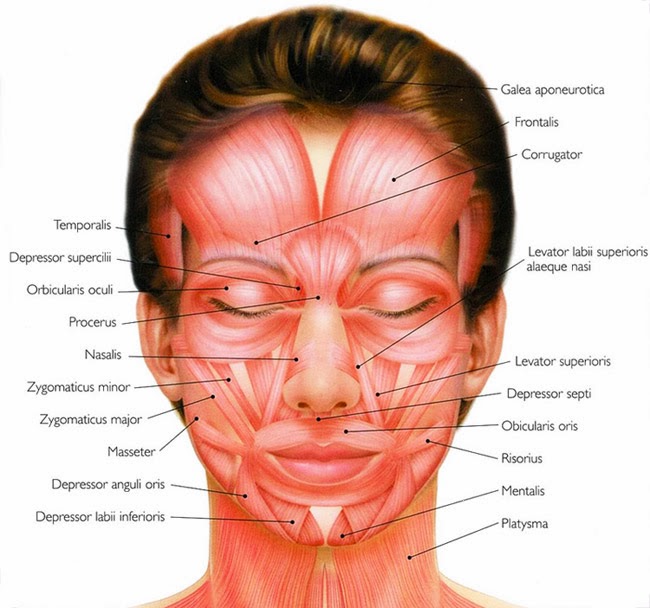
The human face has 42 muscles. Some of these let you perform the basic functions of life, like chewing and breathing. But far more of what they do has nothing to do with life-sustaining functions. Facial muscles are so arranged that human beings can also create an incredible variety of expressions.

We can furrow our eyebrows, purse our lips, grin like a Cheshire cat or frown like the Grinch. We talk with our faces. In fact, human facial muscles are as important to human communication as are words. If you have ever tried to have an important conversation by email, text, or social media you know the inadequacy of non-facial communication.

No matter how many words we type and text, print and publish, our most important communications will always take place face to face. That’s why proposals of marriage are not done by email. That’s why we go to church and don’t only read the Bible. That’s why people gather in family rooms and travel to business meetings. Nations even spend millions of dollars to send ambassadors, secretaries and heads of state all over the world to speak face to face.

Our bodies declare that we were meant to communicate face to face. It’s literally in our DNA. We have muscles, skin and skeletal features that serve no other purpose.

Some would say that this is a remarkable product of evolution. I think that’s hogwash. Such theories assume that everything can be boiled down to pragmatism. Evolutionists will theorize that somehow people who had the special muscles which enabled them to smile were more fit to survive than those who didn’t.

Evolutionary theory cannot find purpose in anything. It can only see random developments either surviving or dying in the meat-grinder of nature. What a purposeless world! No wonder that decades of teaching it to our school children has created so many pessimistic people.

For my part, I am quite certain that we could survive just as well without faces. We would just have a lot less joy. Faces are for fun, not survival. Evolutionary theory is the most joyless and bleak worldview that anyone can have.

That’s why I have never met an evolutionist that believes their own theory 100 percent. Purposelessness is its soft underbelly. Committed evolutionists like Neil Degrasse Tyson try to cheer you up by telling you that you are made of stardust. But so is a cockroach. Big deal. Without purpose life has no meaning.

The more thoughtful evolutionists generally seek purpose by talking about “saving the human race.” But this doesn’t stand up to evolutionary standards. If human beings evolved from a meaningless single-cell organism and are evolving into something better still, saving the human race has about as much meaning as saving a strain of pneumonia cells.

But where evolutionary theory has no place for play, joyful exuberance is at the center of God’s creation. Creation tells about a God who did something that He didn’t have to do—something that wasn’t necessary for his survival. He made things and people for the sheer joy of making them.

You don’t get more optimistic than that. Who would literally move heaven and earth just to express his eternal love? God would. Not only does this account of the world make loads more scientific sense than any of the current evolutionary theories, it is also way more joyful.

It also helps to explain how we got faces.

What if I told you that God put 42 muscles into your face because he delights in your delight? When we talk to one another face to face, we use muscles and make expressions which have nothing to do with our survival. They have everything to do with our joy.

Those muscles have meaning. They didn’t just evolve and survive the meat grinder. They have been there all along. They are characteristic of being human. They make us uniquely suited for community. They make us not just a community of minds, but a community of bodies.

All of this also means that faces are forever. If having faces means anything, it means that we are not going to evolve away from having faces. Your face is an integral part of who you are. When you fully communicate yourself to others, you are not just projecting bodiless thoughts. But your very skin and muscles are an inseparable part of communicating yourself. That’s not going to change with time.

Knowing all this, we know ourselves better. Human beings are not just minds haphazardly encased in randomized bodies. Your face is an integral part of who you are; without it, you cannot fully communicate yourself to others. What is more, it’s not just your face that is integral to who you are, so is your entire body.

This observation is a corrective to one of the strangest phenomena of our day. Among those encumbered by an evolutionary worldview there are many who are estranged from their own body. They drive a wedge between the mind and the body, as though these are not only separable from one another, but at war with one another.

That’s tragic and it leads to much suffering and death. This suffering and death is both self-inflicted and inflicted on others. Whenever human beings have come to think that certain bodies don’t matter, they have done the most terrible things to those bodies—and therefore, to those people.

Such a tragic worldview cannot arise in a mind that reflects on its own face. If your face is an integral part of who you are, so is the rest of your body. And who you are is not a tragedy, but an exuberant and joyful work of God.

One of the great ironies of our day is the phenomenon called “Facebook.” There in cyberspace 2.6 billion people are trying to communicate without using their faces. Through a flurry of fingers on the keyboard, people try to communicate more and more content to more and more “friends.”

Has this project improved the human race? I think not. It has not helped to unify us, but only to polarize. It has not helped us to love one another, but it sure adds to the hate. It has not enhanced the discussion of the most important things but made such discussion nearly impossible. In short, it has created far more enemies than friends.

You are not just a mind with a bundle of thoughts. You are a person—body and soul. The very concept of “person” came from the Greek word for “face”. The most important things that you will ever do in your life involve your body.

So, don’t sell it short. Let’s spend more time using our faces again. It’s one of your most God-like features. It enables you to spread joy and love that is not necessary for your survival. It is totally exuberant and unnecessary. It is what makes life worth living, and what makes you most human.